What Is Offset Printing? Process, Differences, and Benefits
Offset printing remains the gold standard for high-volume commercial print. Learn how the process works, how it differs from digital, and when it is the right choice for your project.
The Fundamentals of Offset Lithography
Offset printing — formally called offset lithography — has been the backbone of commercial printing for over a century. Despite the rise of digital alternatives, it remains the dominant process for high-volume, color-critical work. At VSL Print we have operated offset presses in Manhattan since 2009, and understanding this process helps clients make smarter decisions about when to use it and when digital is a better fit.
How the Offset Printing Process Works
The process begins with prepress: a designer's digital file is used to produce aluminum printing plates, one for each ink color (typically Cyan, Magenta, Yellow, and Black in four-color process printing, plus any Pantone spot colors). Each plate carries a photochemical image of the content to be printed. Platemaking and makeready are also why offset needs more lead time than digital — our guide to offset printing turnaround times breaks down what to expect.
During printing, the plates are mounted on cylinders on the press. The plate cylinder rotates, picks up ink from the inking system (and water from the dampening system, since oil-based ink and water repel each other), then transfers — or offsets — the inked image to a rubber blanket cylinder. The blanket cylinder then transfers the image to the paper or substrate running beneath it.
This indirect transfer is the defining characteristic of offset printing. The soft rubber blanket conforms to slight surface irregularities in the paper, producing sharp, consistent dot reproduction across the full sheet.
Offset vs. Digital Printing: Key Differences
The two processes differ in several important ways:
- Setup cost: Offset requires plate-making for each job, creating a fixed setup cost. Digital printing requires no plates, making short runs economical.
- Cost per unit at volume: Once plates are made, the marginal cost of each additional impression is very low. At quantities above 500–1,000 units, offset is typically less expensive per piece than digital.
- Color accuracy: Offset can print exact Pantone spot colors using dedicated inks, guaranteeing brand color accuracy across millions of impressions. Digital printing simulates Pantone colors using CMYK halftone dots, which is close but not identical.
- Variable data: Digital printing can change text, images, or codes on every sheet (personalized mailers, serial numbers). Offset cannot vary content within a run.
- Substrate range: Both processes handle a wide range of papers, but offset is particularly well-suited to very heavy or textured stocks that can be difficult for digital presses.
The Benefits of Offset Printing
Exceptional Color Quality
Offset printing produces the finest halftone resolution available in commercial print. Stochastic (FM) screening and fine-line conventional screening produce smooth gradients and photographic detail that holds up under close inspection. For annual reports, art books, luxury packaging, and brand materials where reproduction quality is non-negotiable, offset remains the benchmark.
Pantone and Specialty Inks
Offset presses can run Pantone spot colors, metallic inks, fluorescents, and custom mixed inks as dedicated ink units. This gives brand managers and designers precise control over color output that cannot be fully replicated by toner-based digital systems.
Inline Finishing Options
Modern sheet-fed offset presses can apply varnishes and coatings — gloss, matte, soft-touch, and spot UV — in a single pass through the press. This inline finishing capability reduces production time and cost on high-end jobs.
Consistent Quality at Scale
A well-controlled offset press can hold tight color tolerances across 50,000 impressions. For print buyers ordering large quantities, this consistency is invaluable: the ten-thousandth piece looks the same as the first.
When Should You Choose Offset?
Offset printing is typically the right choice when:
- Your quantity exceeds 500–1,000 pieces and per-unit cost matters
- You require exact Pantone color matching
- Your project calls for specialty inks (metallics, fluorescents) or inline coatings
- You are printing an art book, luxury brochure, or premium packaging where reproduction quality is the priority
For quantities under 250, highly variable content, or tight turnarounds where plate-making time is a constraint, digital printing will serve you better.
The Role of Prepress and Plate-Making
Offset quality is decided long before the press starts. In prepress, your file is preflighted, color-managed, and imposed — arranged so that multiple pages or pieces fall into the correct position on the press sheet and read in the right order after folding and trimming. The imposed file is then output to plates, today most often by a computer-to-plate (CTP) system that images each aluminum plate directly from the digital file with a laser, eliminating the film step older workflows required. Accurate plate-making and tight imposition are what allow a multi-page catalog to fold, gather, and bind into a clean finished book.
Because plates and makeready represent fixed setup cost, the economics of offset reward planning. Deciding your final size, page count, and color build before plates are imaged avoids the expense of remaking plates mid-job. This is why our estimators ask detailed questions up front — the answers shape the most cost-effective way to lay your work out on the sheet.
Understanding Makeready and Color Control
Makeready is the setup phase at the start of each run, when operators load plates, balance ink and water, and bring color up to target. As a G7-calibrated shop, we calibrate our process to a recognized gray-balance and tonal standard, which keeps color predictable from job to job and from proof to press. During the run, operators pull sheets and check them against the approved proof and against densitometer or spectrophotometer readings, adjusting ink keys as needed to hold color across thousands of impressions. This disciplined control is the reason the last sheet of a long offset run matches the first.
Frequently Asked Questions
Is offset outdated now that digital exists? No. Digital has taken over short runs and variable work, but offset still leads on long runs, exact spot-color brand matching, specialty inks, and the finest reproduction quality. The two processes are complementary, not competing.
What is the minimum quantity that makes offset worthwhile? There is no hard rule, but offset typically becomes cost-competitive above roughly 500 to 1,000 pieces, where the low per-impression cost outweighs the fixed plate and setup charges.
Can offset and digital be combined on one project? Yes. A common approach is running a large base quantity on offset for cost and consistency, then using digital for personalized or last-minute additions. We can advise on a hybrid plan when it fits your project.
What products are best suited to offset? Catalogs, annual reports, art and photo books, premium brochures, luxury packaging, and stationery suites all benefit from offset's reproduction quality, exact spot-color matching, and low per-piece cost at volume.
Common Offset Products and Why They Suit the Process
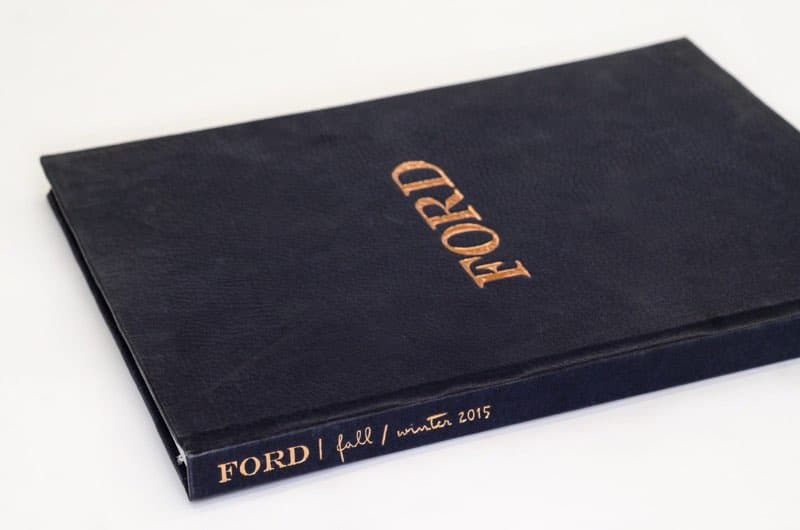
Offset's strengths line up naturally with certain products. Long-run catalogs and brochures benefit from the low per-impression cost once plates are made. Books and annual reports rely on offset's fine halftone reproduction and consistent color across many signatures. Stationery suites — letterhead, envelopes, and business cards — often use one or two spot colors, which offset prints more economically and accurately than full CMYK. Luxury packaging and folding cartons take advantage of inline coatings, metallic inks, and heavy board handling. In each case, the decision to print offset comes down to a combination of quantity, color requirements, and finishing — exactly the factors our estimators weigh when recommending a process. Fashion houses lean on those same strengths for lookbooks and line sheets, where faithful color reproduction sells the collection.
VSL Print's Offset Capabilities in Manhattan
Our Manhattan facility runs multi-unit sheet-fed offset presses capable of printing up to 13" x 19" sheets with full four-color process plus one or two spot color units. We handle annual reports, catalogs, books, packaging, stationery, and more. Contact us at 646-843-0800 or request a quote online to discuss your next offset project.
Looking for professional offset printing services?
View Offset Printing ServicesReady to start your print project?
Get a free quote from a NYC commercial printer. Rush turnaround available.