Can You Print Digitally on Materials Beyond Paper?
Modern digital printing goes far beyond standard paper stocks. Discover the wide range of substrates VSL Print can handle — from vinyl and canvas to rigid boards and fabric.
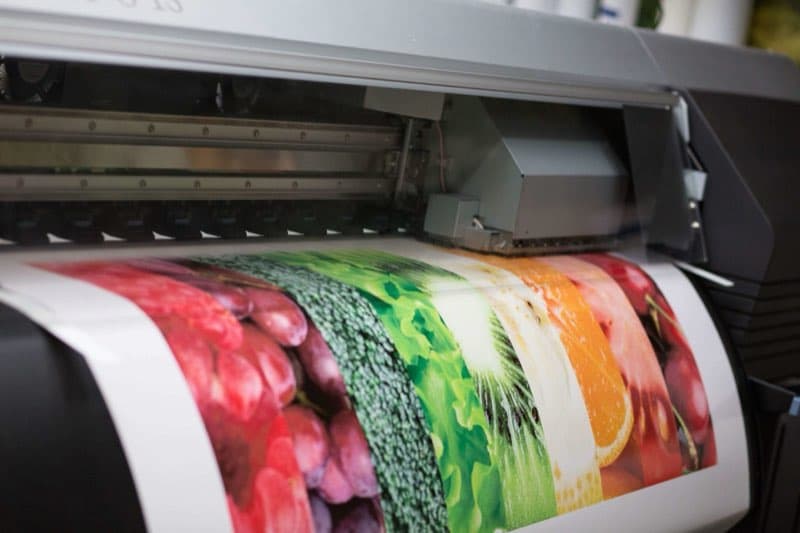
Digital Printing Is Not Just for Paper Anymore
When most people think of digital printing, they picture standard 8.5 x 11 office paper or glossy flyers. But modern digital print technology has evolved dramatically — today, you can digitally print on a wide variety of substrates that open up entirely new applications for marketing, signage, retail displays, and more. These presses handle personalization as readily as unusual materials — a capability we chart in our deep dive into variable data digital printing.
At VSL Print, we regularly print on materials well beyond traditional paper stocks. Here is what is possible.
Common Non-Paper Substrates for Digital Printing
Vinyl
Vinyl is one of the most versatile digital print substrates. We print on adhesive vinyl for wall graphics, window decals, floor graphics, and vehicle wraps. Vinyl is durable, weather-resistant, and available in matte, gloss, and specialty finishes. It is the go-to material for retail and outdoor signage in NYC.
Canvas
Fine art reproductions, gallery wraps, and high-end interior displays all benefit from canvas printing. Our large-format digital presses reproduce photographs and artwork with exceptional detail and richness on archival canvas stock.
Rigid Boards
For trade show displays, retail POS, and indoor signage, we print directly on rigid substrates including:
- Foam core — lightweight, ideal for mounting and short-term displays
- Gatorboard — more durable than foam core, suitable for repeated use
- Sintra (PVC board) — weather-resistant rigid panel for indoor and outdoor use
- Aluminum composite panels (Dibond) — premium rigid substrate for long-term signage
- Acrylic — a sleek, glass-like substrate for high-end display applications
Fabric and Textiles
Fabric printing is popular for trade show backdrops, event banners, retail environments, and hospitality applications. We print on polyester fabric substrates that are lightweight, wrinkle-resistant, and vibrant — often used with tension frame systems for a seamless, professional look.
Specialty Papers and Stocks
Beyond standard coated and uncoated paper, we print on metallic papers, translucent stocks, synthetic papers (waterproof, tear-resistant), and thick cardstock for specialty applications.
What Determines If a Material Can Be Digitally Printed?
Digital inkjet technology has made it possible to print on almost any flat surface. The key factors are:
- Flatness — rigid substrates must feed flat through the press or be printed on a flatbed
- Surface receptivity — some materials need a coating or primer to accept ink properly
- Heat tolerance — some digital presses use UV curing; the substrate must tolerate the process
- Size constraints — each press has a maximum width and substrate thickness it can accommodate
Flatbed vs. Roll-to-Roll: Two Ways to Print Non-Paper
Most non-paper digital printing happens on one of two machine types, and knowing the difference helps you understand what is possible. A flatbed printer holds a rigid sheet stationary on a vacuum table while the print heads pass over it, allowing direct printing onto stiff materials like acrylic, foam board, Dibond, wood, and PVC up to a certain thickness. A roll-to-roll printer feeds flexible media — vinyl, banner stock, fabric, film — from a roll, printing continuously and rewinding the finished graphic. Some machines are hybrids that do both. This is why a foam-core sign and a fabric banner are produced on different equipment even though both are "digital prints," and why thickness and rigidity are among the first questions we ask about an unusual material.
Direct Print vs. Print-and-Mount
There are two paths to a finished rigid graphic. Direct printing lays ink straight onto the rigid substrate on a flatbed, which is fast and avoids lamination bubbles but is limited to materials the flatbed can accept. Print-and-mount prints the graphic on a flexible media or paper, then laminates and mounts it onto a rigid backer. Mounting allows a wider range of decorative face materials and lets us add a protective laminate, but it adds labor. For high-volume rigid signage, direct printing is usually more efficient; for premium displays where the exact face finish matters, print-and-mount often wins. We choose the method based on your material, finish, durability, and budget. When the face finish is the point, we often pair mounted prints with soft-touch lamination for a velvety surface that invites handling.
How the Ink Bonds: Why Some Substrates Need a Primer
The reason digital printing works on so many surfaces comes down to how the ink chemistry interacts with the material. UV-curable inks, used on most flatbed printers, are liquid until a UV lamp instantly cures them into a hardened film the moment they hit the surface. Because the ink cures rather than soaks in, it can sit on top of non-absorbent materials like acrylic, metal, and rigid PVC. Latex inks, common on roll-fed printers, use heat to fuse water-based pigment to the substrate, producing odorless, durable graphics ideal for indoor wall coverings. Eco-solvent inks lightly etch into vinyl and films, creating outdoor-durable, weather-resistant graphics.
Some smooth or low-energy surfaces — certain plastics, raw metals, glass — do not naturally accept ink and require a primer or a substrate engineered with a receptive coating. This is why a print-ready vinyl behaves differently than a sheet of bare acrylic. When you bring us an unusual material, the first thing we evaluate is surface energy and whether a primer or adhesion-promoting pass is needed.
Matching the Substrate to the Application
- Short-term indoor display: foam core or standard paper-faced board keeps cost down for a window display or one-time event.
- Repeated-use signage: Gatorboard or PVC resists denting and warping through multiple setups.
- Outdoor and weather exposure: vinyl, Coroplast, or Dibond stand up to sun, rain, and temperature swings.
- Premium retail and corporate: direct-to-acrylic or mounted prints with second-surface printing deliver a high-end, dimensional look.
- Soft, packable graphics: tension fabric folds into a carry bag and sets up wrinkle-free, perfect for trade shows that travel.
Frequently Asked Questions
Can you print white or metallic on clear materials? On equipment with a white ink channel, yes — a white underbase lets color pop on transparent acrylic or dark substrates, and second-surface printing on clear acrylic gives a glass-like finished face.
Will the graphic survive outdoors? With the right ink and an optional protective laminate, exterior graphics commonly last one to several years depending on substrate and sun exposure. We will spec the combination to your expected lifespan.
Do I need different artwork for non-paper printing? The design principles are the same, but rigid and large substrates use lower working resolution at final size and benefit from vector logos and text. We are happy to review your file before production.
How do I pick between a rigid and a flexible material? It comes down to how the piece will be displayed. If it needs to stand on its own, mount to a wall, or survive handling, a rigid substrate is the answer. If it will hang, wrap, travel, or apply to a curved surface, a flexible vinyl, film, or fabric is the better fit. Tell us the display method and environment and we will narrow it quickly.
Can you print on something I supply? Often, yes, provided the material is compatible with our presses and accepts ink or can be primed. Bring a sample and we will test adhesion before committing your full job to it.
Ask Us About Your Substrate
Not sure if your material can be printed? The best approach is to ask. At VSL Print, we work with architects, retailers, event producers, and marketing teams every day to find the right substrate for each project. Because offset, digital, large format, and finishing all run in-house, we can test and produce without outsourcing. We will guide you toward the material that delivers the best result within your budget and timeline.
Call us at (646) 843-0800 or visit our shop at 239 West 29th Street, Manhattan, to discuss your project.
Looking for professional digital printing services?
View Digital Printing ServicesReady to start your print project?
Get a free quote from a NYC commercial printer. Rush turnaround available.