Finishing Services — Soft-Touch Lamination
Soft-Touch Lamination NYC
The finish people can't stop touching.
Velvet-feel lamination that transforms business cards, packaging, book covers, and marketing materials into luxury tactile experiences. Applied in-house at our Manhattan facility.
Soft-Touch Finishing Options
Soft-touch lamination on its own is beautiful — but it truly shines when combined with other premium finishing techniques.
Soft-Touch Lamination
The signature velvet-feel finish that transforms any printed piece into a luxury tactile experience. The film creates a warm, suede-like surface that people instinctively want to touch and hold. Ideal for any project where first impressions and perceived value matter.
Soft-Touch + Spot UV
The most sought-after premium combination in commercial printing. A soft-touch lamination base paired with high-gloss spot UV on selected elements creates a dramatic visual and tactile contrast that elevates any design to luxury status.
Soft-Touch + Foil Stamping
Metallic foil stamped over a soft-touch lamination base creates a striking contrast — gleaming metallic elements against a velvety matte background. Gold and silver foils are the most popular combinations, delivering an unmistakably premium feel.
Soft-Touch + Embossing
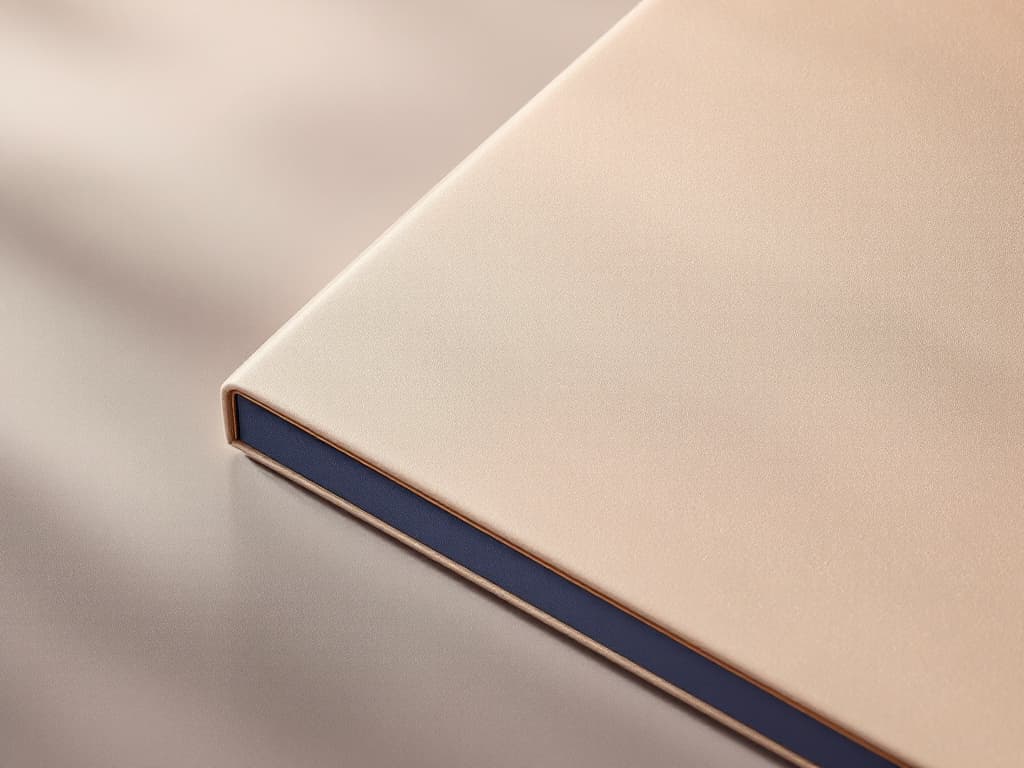
Combining soft-touch lamination with blind embossing or debossing adds another dimension of tactile interest. The raised or recessed areas create texture within the already-luxurious velvet surface, resulting in a truly multi-sensory print piece.
Popular Applications
Soft-touch lamination elevates any print piece into a premium experience. Here's where NYC businesses use it most.
Business Cards
Soft-touch business cards are the gold standard for making a memorable first impression. The velvet texture makes people pause, feel the card, and remember your brand.
Luxury Packaging
Cosmetics, jewelry, wine, spirits, and premium retail packaging. Soft-touch lamination signals quality and justifies premium pricing on shelf.
Book Covers & Dust Jackets
Publishers and self-published authors choose soft-touch for a bookstore-ready finish that stands out on shelves and feels premium in readers' hands.
Wedding & Event Invitations
Set the tone for a special occasion with invitations that feel as luxurious as the event itself. Soft-touch lamination paired with foil or letterpress is unforgettable.
Presentation Folders
Corporate presentation folders with soft-touch lamination convey professionalism and attention to detail. Perfect for real estate, financial services, and law firms.
Menus & Hospitality
Upscale restaurants and hotels use soft-touch laminated menus and collateral to reinforce their brand experience from the moment a guest sits down.
Why Choose Soft-Touch Lamination?
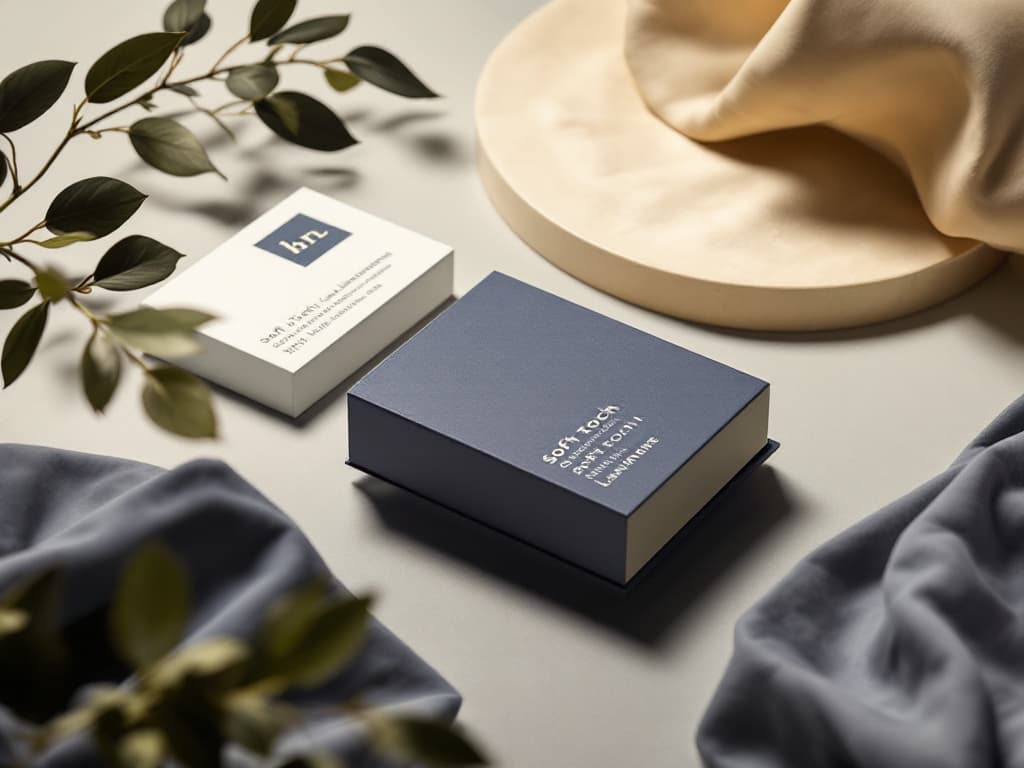
In a city where every brand fights for attention, texture is a secret weapon. Soft-touch lamination creates a physical connection between your brand and your audience that digital media simply cannot replicate. Nowhere is that clearer than on the custom business cards we finish with velvet-matte film every week.
- Velvety, suede-like feel that people remember
- Resists fingerprints better than gloss lamination
- Protects against scratches, scuffs, and moisture
- Pairs beautifully with spot UV, foil, and embossing
- Deepens color saturation for rich, muted tones
- Increases perceived value of any printed piece
- In-house application for fast turnaround
- Available on any stock from business cards to rigid packaging
In-house finishing
laminated, finished, and bindery-ready under one roof at our Manhattan facility
How Soft-Touch Lamination Is Applied
Soft-touch is a thermal laminate film, not a coating you can spray or roll. A thin polypropylene-based film carrying a matte, micro-textured top layer is bonded to the printed sheet under heat and pressure. The texture you feel comes from that engineered surface, so the result is consistent across an entire run rather than dependent on how a liquid coating settles and dries. Gloss and matte films are also available through our wider laminating services if velvet isn't the right fit.
01
Print & Cure
Your sheets are printed on our in-house offset and digital presses and given time to set. Heavy ink coverage is allowed to dry fully so no solvents are trapped beneath the film.
02
Laminate
Sheets run through a heated roller laminator that bonds the soft-touch film to the printed surface. We laminate one or both sides depending on the piece — most cards and covers are two-sided.
03
Spot Finishing
Once laminated, optional spot UV, foil stamping, embossing, or debossing is registered to the film. Soft-touch is the base layer, so these accents land on top of the velvet surface.
04
Cut & Bindery
Finished sheets are die cut or guillotine trimmed, then folded, scored, or bound. Doing this in sequence under one roof keeps registration tight and turnaround short.
Stocks & Substrates
Soft-touch film bonds best to coated stocks with a smooth, dense surface. We most often apply it to heavyweight cover stocks in the 14pt to 18pt range for business cards, folders, and book covers, and to text-weight coated sheets for dust jackets and brochures. The film adds body and rigidity, so a soft-touch 16pt card feels noticeably more substantial than the bare sheet. Uncoated and textured stocks can accept the film, but the velvet effect reads most cleanly on a smooth coated surface. If you are unsure whether your stock is a good candidate, send us a sample or specs and we will confirm before the run.
Durability & Care
The laminate seals the printed surface, adding meaningful resistance to scuffing, creasing, moisture, and the everyday handling a card or cover takes in a bag or mailbox. Because the surface is matte and micro-textured, it hides fingerprints far better than gloss — a real advantage on dark, ink-heavy designs where smudges would otherwise show. Soft-touch is durable, not indestructible: very dark solids can show a faint sheen if rubbed hard over time, and the velvet nap means the surface should be kept away from oily hands and ballpoint pens, which can leave marks. For pieces that will be written on, we leave an unlaminated panel or recommend a writable stock.
Preparing Files for Soft-Touch
A few file considerations make the difference between a good soft-touch piece and a great one. Following them up front keeps your job on schedule and on budget.
- Supply print-ready PDFs with all fonts embedded and images at 300 DPI or higher.
- Include 0.125" bleed on every edge and keep critical text inside a safe margin.
- Build artwork in CMYK; soft-touch slightly deepens and mutes color, so rich blacks and saturated tones read beautifully.
- For spot UV or foil over soft-touch, provide a separate 100% K vector layer marking exactly where each effect goes.
- Keep fine reversed type a touch heavier than usual, since the matte film softens very thin strokes.
Turnaround & Ordering in NYC
Soft-touch lamination adds a finishing pass after printing, and each additional finishing step — foil, spot UV, embossing, die cutting — extends the schedule depending on complexity. Because every stage runs in our own shop, we control the schedule end to end and can compress it when a deadline is tight. Rush options are available for many soft-touch jobs; the sooner we see final files, the more flexibility we have.
Local clients are welcome to drop off, pick up, or review a physical proof in person Monday through Friday, 9 AM to 7 PM. As a G7-calibrated printer, we hold consistent color from proof to press so the laminated result matches what you signed off on. Whether you need a hundred luxury business cards or a long run of packaging, we can recommend the right stock, film, and finishing combination for your budget and timeline.
Combine with Other Finishing
Soft-touch lamination is even more impactful when paired with other premium finishes.
Soft-touch lamination is a specialty film applied to printed surfaces that creates a velvety, suede-like texture. When you run your fingers across a soft-touch laminated piece, it feels smooth, warm, and luxurious — distinctly different from standard gloss or matte lamination.
While both create a non-glossy finish, soft-touch lamination has a distinctly tactile quality that matte lamination does not. Soft-touch feels velvety and warm to the touch, almost like suede or peach skin. Standard matte lamination is smooth but lacks that plush, inviting texture.
Soft-touch lamination is most popular for business cards, luxury packaging, book covers (especially hardcover dust jackets), invitations, presentation folders, cosmetics packaging, wine labels, and any piece where a premium tactile experience is important to the brand.
Yes, and this is one of the most popular premium finishing combinations in the industry. The soft, matte background of the lamination makes spot UV elements — logos, text, images — appear dramatically glossy by contrast. The result is both visually striking and tactile.
Yes. Soft-touch lamination provides excellent protection against scuffing, scratching, fingerprints, and moisture. It is more resistant to fingerprint marks than gloss lamination, making it ideal for dark-colored designs where fingerprints would otherwise be visible.
Soft-touch lamination costs slightly more than standard gloss or matte lamination due to the specialty film used. However, the premium tactile experience it delivers often justifies the cost for high-end business cards, luxury packaging, and brand materials where first impressions matter.
Yes. Foil stamping over soft-touch lamination is a stunning combination — the metallic foil gleams against the matte velvet background. Spot UV can also be applied over the lamination. These combinations are very popular for luxury business cards and premium packaging.
Soft-touch lamination adds a finishing pass after printing is complete, and rush service is available. If combining with other finishing (foil stamping, spot UV, die cutting), each additional process adds time to the schedule.
Soft-touch film bonds best to smooth, coated stocks. We most often apply it to heavyweight cover stocks in the 14pt to 18pt range for business cards, folders, and book covers, and to coated text-weight sheets for dust jackets and brochures. Uncoated and textured stocks can be laminated, but the velvet effect reads most cleanly on a smooth coated surface. The film also adds rigidity, so a soft-touch card feels more substantial than the bare sheet.
The laminated surface is not designed for writing — ballpoint and most pens will smudge or skip on the velvet film. If your piece needs to be written on, such as an appointment card or a signature line on an invitation, we leave that panel unlaminated or recommend a writable stock for that area. Let us know during file prep and we will plan the layout accordingly.
Yes, slightly. The matte film deepens and mutes color, giving rich, sophisticated tones and very dark, velvety blacks. Bright fluorescent or neon-style colors will look a little softer than they do on a glossy finish. Because of this we recommend building artwork in CMYK and, where exact color is critical, reviewing a proof. As a G7-calibrated shop, we hold consistent color from proof through the laminated final piece.
Yes. We laminate everything from a hundred luxury business cards to long packaging runs, all in-house at our Manhattan facility. Because printing, lamination, finishing, and bindery all happen under one roof, we control the schedule end to end and can offer rush options on many soft-touch jobs. The sooner we receive final files, the more scheduling flexibility we have.
Ready for the finish people remember?
Get a quote for soft-touch lamination on your next project. We'll help you choose the perfect combination of finishes for maximum impact.
Located in Midtown Manhattan · Fast turnaround · Rush available