What Sizes Can I Print? The Ultimate Guide to Large Format Print Sizes
From 24" posters to 100-foot building wraps, large format printing covers an extraordinary range of sizes. Here's how to think about size, what's standard, what's custom, and how size affects cost.
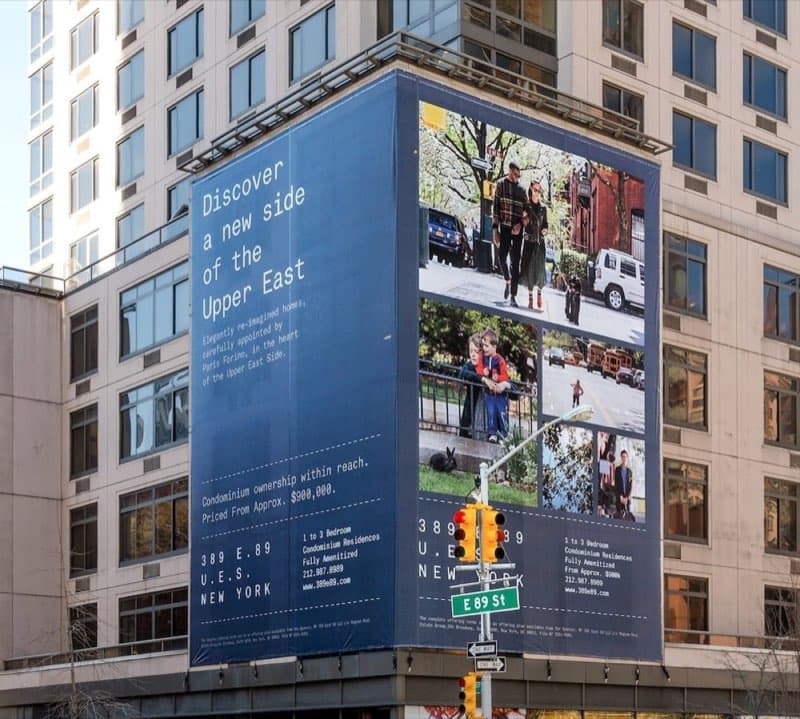
How Big Can You Go? Large Format Printing Size Guide
Large format printing is defined by its ability to produce output larger than standard commercial printing equipment can handle. But "large format" spans an enormous range — from 24" × 36" posters to 100-foot building wraps. Understanding how size affects your project — technically, logistically, and economically — is the first step in planning any large format job.
The Starting Point: What Is "Large Format"?
Industry convention generally treats any print output wider than 18"–24" as large format. Standard commercial digital presses top out at about 13" × 19" — anything larger requires wide-format inkjet equipment. Wide format inkjet presses are defined primarily by their maximum print width, ranging from about 24" on desktop-class machines to very wide production formats on production-grade roll-fed systems. Print length on roll-fed machines is theoretically unlimited.
Common Large Format Print Sizes by Product Type
Posters
- Small poster: 18" × 24" — common for indoor event and venue posters
- Medium poster: 24" × 36" — the most common standard poster size; fits standard poster frames
- Large poster: 27" × 40" — the US "one-sheet" movie poster standard
- Oversized: 30" × 40", 36" × 48", 40" × 60", and beyond
Banners
Banners are among the most size-flexible large format products — they can be almost any width up to the press maximum, and any length on a roll-fed system.
- Typical indoor banner: 2' × 6', 3' × 8', 4' × 8'
- Typical outdoor banner: 3' × 10', 4' × 12', 4' × 20', 6' × 24'
- Retractable banner stands: Typically 33"–47" wide × 78"–92" tall
- Step-and-repeat backdrops: Typically 8' × 8', 8' × 10', 10' × 10', or custom
Trade Show Displays
- Table throws: Custom to standard 6' or 8' table sizes
- Pop-up displays: Typically 8'–10' wide × 7'–8' tall
- Inline booth backwalls: 10' or 20' wide in standard booth configurations
- Island displays: Custom, often 20' × 20' or larger footprints
Window and Wall Graphics
Sized to the specific window or wall being covered — there's no standard size, just the dimensions of the space. Very large wall murals may need to be tiled (multiple panels joined) if they exceed the press width.
Maximum Size Limits
Common maximum widths for production large format equipment:
- 24"–36": Desktop or small-format wide-format printers
- 54"–60": Mid-range production printers (very common in commercial shops)
- 64"–72": Large production printers
- Super-wide format: Very wide production printers
- Grand format: Specialized presses for billboards and building graphics
For output wider than a single press can produce, panels are printed separately and seamed during installation. Skilled installers can make seams essentially invisible on most applications.
How Size Affects Cost
Large format pricing is primarily based on square footage — a banner twice as wide and twice as tall is four times the square footage and roughly four times the substrate and ink cost. Very small large format pieces (under 4 sq ft) often have minimum order charges. Very large pieces (100+ sq ft) sometimes have lower per-square-foot rates due to efficient production runs.
Planning Size for Your Application
- Measure the space first. Don't design a banner and then discover the installation space is a different size.
- Consider standard retractable banner sizes if you're using a stand — stand dimensions constrain banner size.
- Think about shipping. Banners ship rolled in tubes or flat in boxes. Very large pieces may require freight.
- Consider viewing distance. A sign that's too large for its environment can look overwhelming or be hard to read.
VSL Print produces large format output from small posters through large building graphics. If you have a space and need signage for it, bring us the measurements and let us help you plan the right size, material, and format for your project. Store environments account for much of that range, from window graphics to retail display printing sized to the exact fixture it will occupy.
Tiling and Seaming for Oversized Graphics
When a graphic exceeds the press's maximum print width — a wall mural taller than 54 inches, or a backdrop wider than the roll — it's produced in multiple panels and joined during installation. There are two common approaches. Overlap seaming prints a small redundant strip on adjacent panels so installers can align the artwork precisely; butt seaming places panels edge to edge. Skilled installers can make seams nearly invisible by routing them along natural breaks in the design, and good file preparation places seams where they're least noticeable — away from faces, logos, and fine detail. Planning for tiling from the start, rather than discovering it after design, produces far cleaner results on large wall and building graphics.
Resolution Scales With Viewing Distance, Not Size
A counterintuitive but crucial point about large format sizing: bigger does not mean you need more resolution. Because oversized pieces are viewed from farther away, the required resolution actually drops as size increases. A 24" × 36" poster viewed at arm's length wants 150 dpi or more; a building wrap viewed from across the street looks perfectly sharp at 15–30 dpi. Designing to the viewing distance rather than to the physical size keeps file sizes manageable and avoids the wasted effort of supplying impractically huge files for pieces no one will inspect up close. When in doubt, tell your printer the size and the typical viewing distance, and let them confirm the target resolution. Guessing at these numbers is one of the errors we cover in our guide to common large format printing mistakes.
Frequently Asked Questions
What's the largest size you can print as a single piece? It depends on the press width — commonly up to 54"–60" on mid-range production printers, wider on super-wide equipment. Anything larger is tiled and seamed.
How do I pick a poster size? Match it to your display: 24" × 36" fits standard frames, 27" × 40" is the movie one-sheet standard. Measure the space before committing.
Does a bigger banner cost proportionally more? Large format is priced by square footage, so doubling both dimensions roughly quadruples the area — and the cost. Very large pieces sometimes earn a lower per-square-foot rate.
Standard Sizes vs. Custom: When Each Makes Sense
Many large-format products have de facto standard sizes — 24" × 36" posters, 33"-wide retractable banner graphics, 8' × 8' step-and-repeat backdrops — because they pair with off-the-shelf frames, stands, and hardware. Designing to a standard size lets you use stock display hardware and makes reordering and replacement simple. Custom sizes are the right call when the installation space dictates the dimensions, as with a specific wall, window, or architectural feature. The trade-off is that custom pieces may need custom mounting and can't reuse standard hardware. A useful rule: if the piece relies on a stand or frame, design to that hardware's standard size; if it's fitting a fixed space, measure the space and build the graphic to it.
Mind the Hardware, Not Just the Graphic
Sizing decisions should account for the system the graphic lives in. Retractable banner stands constrain both width and height to the cassette they retract into. Tension-fabric frames require the graphic to be cut and sewn to precise tolerances so it stretches taut without sagging or over-stretching. Pop-up and modular booth systems have defined panel dimensions. Specifying the graphic size in isolation, then discovering it doesn't fit the stand or frame, is a common and avoidable error. Confirm the hardware first and let its dimensions define the printable size.
Looking for professional large format printing?
View Large Format PrintingReady to start your print project?
Get a free quote from a NYC commercial printer. Rush turnaround available.